Outdoor Activities in Montanejos: Hiking, Climbing, Kayak & Rafting
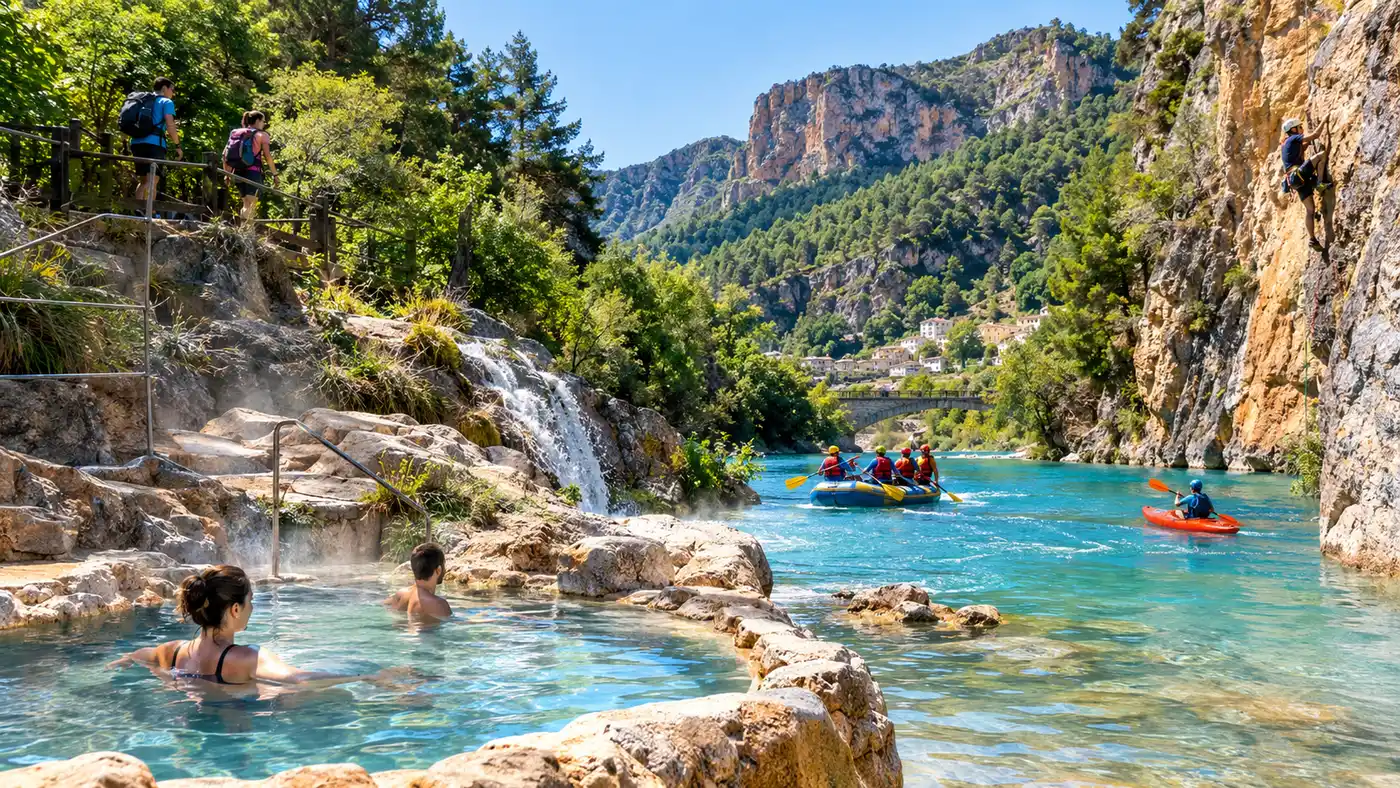
Most travelers show up in this corner of Castellón with swim shorts and flip-flops, ready to lounge in warm thermal water and do little else. That is fine, I suppose, but it completely misses what makes the Mijares river basin dramatic. Towering limestone walls lean right over the river, pine forests crowd the hillsides, and the scent of wild rosemary hits you the second you step out of the car. If you lace up your boots instead of heading straight for the baths, montanejos hiking opens up a rugged playground that feels miles away from coastal tourism.
The village sits in an amphitheater of rock. Over decades, water and geological faults carved deep gorges through the Iberian mountain system, leaving behind cliff faces, secret caves, and river rapids. Whether you want an easy morning loop along the rim, a vertical multi-pitch ascent, or an afternoon bucking through whitewater on an inflatable raft, the terrain delivers. You can spend three full days here without running out of rock or river to explore.
Book your hot springs of montanejos experience:
Classic Montanejos Hiking Trails: From Los Estrechos to Cueva Negra
The crown jewel of any Montanejos hike is the Sendero de Los Estrechos, officially classified as the PR-CV 100. It measures roughly 8.3 kilometers and gains about 340 meters of elevation, which sounds modest until you factor in the loose gravel and steep stone stairs cut directly into the hillside. You start near the village bridge, winding past old irrigation ditches before climbing sharply along the northern rim of the gorge. Far below, the Mijares river narrows to barely 25 meters across, churning bright turquoise between sheer vertical walls that drop straight into the water.
Along the trail, you will pass El Chorro. It is not a natural waterfall, but rather the massive spillway from the Arenoso dam upriver. When the floodgates open to release water, 43,000 liters per second blast out of the rock wall like a firehose, throwing mist hundreds of feet into the air. The trail loops down along the riverbank on the way back, leading directly past the thermal springs at Fuente de los Baños. Ending a hot, dusty hike by jumping boots-off into 25-degree thermal water is one of the finest feelings in eastern Spain.
Pro tip: Hike the Los Estrechos loop counter-clockwise. You will tackle the steep, exposed scree climb while your legs are fresh in the morning shade, finishing along the river gorge just as the midday heat kicks in.
For a wilder, shorter outing, the climb to Cueva Negra is well worth an hour of heavy breathing. The cave mouth is enormous, roughly 27 meters wide, gaping open on the side of the ravine. Prehistoric tribes took shelter here thousands of years ago. The path climbs out of the village through dry pine scrub, and stepping into the cave instantly drops the temperature by 7 or 8 degrees. Bring a headlamp if you plan to explore past the initial vestibule, as the rear chambers descend into pitch darkness where loose rocks make footing tricky.
A third popular option is the Barranco de la Maimona route. This rugged gorge feeds into the Mijares river from the north. The trail hugs the canyon rim on a narrow ledge known as the Bojadillas, giving you sheer drop-offs that will test anyone nervous around heights. If you prefer not to navigate unfamiliar mountain trails alone, booking a montanejos guided hike with natural pools provides a local leader who handles the route finding and explains the complex hydrology of the valley.
- Footwear requirements: Sturdy trail runners or hiking boots with deep tread, as limestone scree gets slick when dry.
- Water supply: Pack at least 2 liters per person because there are zero natural drinking sources on the upper ridges.
- Navigation: Download offline GPS maps before arrival since mobile signal drops out completely inside the deeper canyon walls.
- Timing: Aim for wheels-on-ground by 8:30 AM during warmer months to dodge the brutal midday mountain sun.
Comparison of Montanejos Outdoor Adventures
Choosing what to do depends on how much sweat you want to invest and how comfortable you feel around rushing water or high exposure. The following breakdown compares the four cornerstone outdoor pursuits in the valley so you can plan your days efficiently.
| Activity | Duration | Physical Effort | Estimated Cost | Key Gear Needed |
|---|---|---|---|---|
| Ruta de los Estrechos Hike | 3 - 4 hours | Moderate | Free | Trail shoes, daypack, 2L water |
| Sport Climbing (Maimona) | Full day | High | Free (self-guided) | 70m rope, 14 quickdraws, helmet |
| Mijares Whitewater Rafting | 2 - 2.5 hours | Moderate | Around 43€ per person | Wetsuit, booties, river guide (provided) |
| Arenoso Reservoir Kayaking | 2 hours | Low to Moderate | Around 22€ per rental | Paddle, life vest, sun protection |
Escalada en Montanejos: The Legendary Limestone Crags
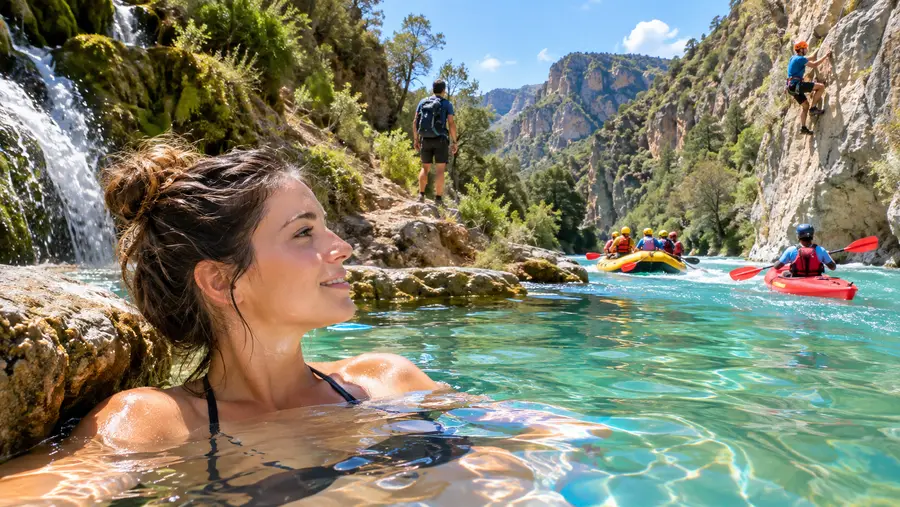
Long before hikers and wellness tourists crowded the river, Montanejos was famous among European rock climbers. During the late 1970s and 1980s, climbing pioneers recognized the potential of these vertical limestone cliffs. Today, escalada en montanejos encompasses over 1,500 bolted sport routes spread across dozens of distinct crags. The style is classic old-school Spanish limestone: technical, crimpy, highly vertical, and occasionally punishing on your calves.
The most famous sector by far is the Barranco de la Maimona. The gorge walls rise up to 150 meters, creating a shaded corridor where you can climb even in warmer weather if you track the shade. Sectors like El Pilar and Las Rosadas offer legendary lines ranging from accessible grade IV and V slabs up to desperate 8c+ testpieces that draw professionals from across the continent. If you want to experimentar el auténtico arte de escalar en montanejos, prepare for technical footwork. The limestone here has seen decades of chalk and climbing rubber, meaning some of the historic classics near the canyon entrance have polished footholds that demand absolute precision.
Note: Some southern-facing limestone walls in the Maimona gorge turn into radiant ovens by noon between June and August. Start at dawn or stick to shady north walls if you plan to climb during summer.
For multi-pitch climbers, the vertical walls of the Mijares canyon offer routes up to 200 meters long. Taking on a multi-pitch line right above the rushing river gives you incredible exposure, with drivers on the CV-20 road looking like ants below. While local activists maintain the routes, older protection exists on some back-country sectors. Always carry a few spare carabiners and inspect anchor rings carefully. Anyone seeking guided montanejos escalada outings can hire certified local guides in town who supply ropes, helmets, and intimate knowledge of which sectors match your grade.
Book your hot springs of montanejos experience:
Montanejos Rafting and Kayak: Navigating the Mijares River
Water drives life in the valley, and getting onto the river itself gives you a very different angle on the cliffs. Montanejos rafting operates down a turbulent 3-kilometer stretch of the Mijares river below the Arenoso dam. The water volume depends entirely on controlled releases from the reservoir, which usually guarantees runnable Class II and Class III rapids throughout the main summer operating season.
The signature rapid is known locally as El Gorgo, a roaring wave train where the river squeezes through a natural bedrock choke point. Your raft drops through boiling green water, bounces off standing waves, and spins into calmer eddy pools below. Rafting guides here run tight ships; they kit you out with neoprene wetsuits, thick river booties, buoyancy vests, and high-impact helmets. The trip is thrilling enough to get your adrenaline spiking without requiring previous whitewater experience, making it accessible for older kids and adventurous beginners alike.
If you prefer a slower, quieter journey, montanejos kayak rentals operate primarily on the calm, expansive surface of the Arenoso reservoir just north of the village. The lake covers roughly 400 hectares, flooded over the old village of Campos de Arenoso decades ago. Paddling out into the middle of the reservoir surrounded by massive crags feels serene. You can maneuver right up to flooded limestone inlets, look down into crystal-clear depths, and pull ashore on isolated gravel beaches that cannot be reached on foot. Double sit-on-top kayaks are standard, stable enough that flipping over requires genuine effort.
Planning Your Montanejos Hike from Valencia
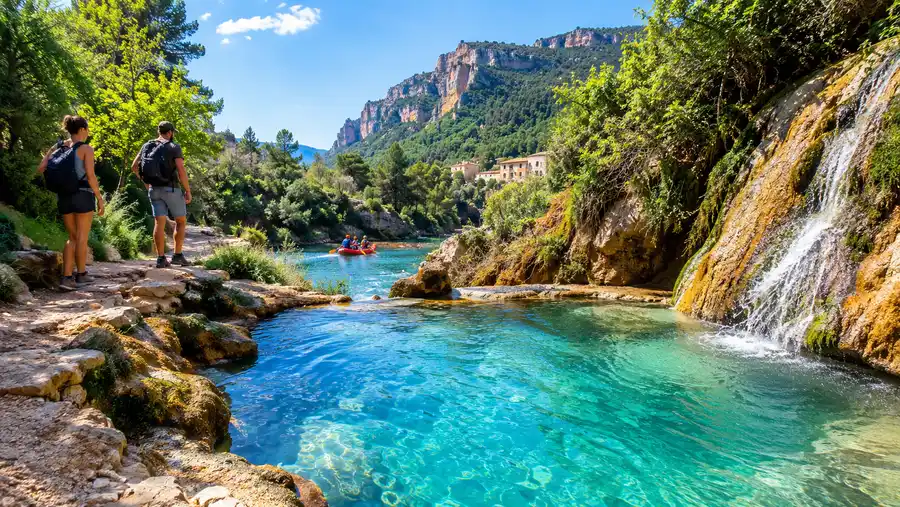
Montanejos sits roughly 90 kilometers north of Valencia city. If you choose to drive up from Valencia, the trip takes about an hour and twenty minutes via the AP-7 and CV-20 highways. The last 20 kilometers wind through scenic citrus orchards before ascending into steep mountain gorges with sweeping curves. Parking near the trailheads fills up quickly, especially on Saturdays from May through October, so arriving before 9:00 AM saves you from parking half a mile outside town.
Public transit exists, but it requires patience. A regional bus operated by Autocares Herca runs from Valencia to Montanejos, though the schedule caters more to locals running errands than hikers chasing early morning starts. For travelers without a rental vehicle, joining an organized montanejos hike valencia excursion simplifies the logistics immensely. These tours typically handle transport from downtown Valencia, guide you along the Los Estrechos trail, and leave you with free hours to swim before driving back in the late afternoon.
- Best season for hiking: October to May offers crisp air, quiet trails, and vibrant autumn foliage along the river banks.
- Best season for watersports: June to September guarantees active dam releases for river rafting and pleasant lake swimming.
- Local facilities: Montanejos has three small bakeries, several hearty tapas bars, and a pharmacy, but gear shops are limited.
- Permits and fees: Hiking and climbing are free year-round; the lower thermal pools charge a small conservation entry fee during summer peak days.
A smart day trip mixes sweat and recovery. Tackle an 8-kilometer loop on the hills above town first, eat a lunch of mountain ham, crusty bread, and local sheep cheese in the village square, then grab a paddle or swim in the thermal waters as the afternoon sun casts long shadows across the canyon walls.
Frequently Asked Questions about montanejos hiking
How difficult is the popular Ruta de los Estrechos trail?
It is rated moderate. The trail covers about 8.3 kilometers with roughly 340 meters of elevation change. While the climb is relatively short, certain sections feature steep gravel descents and exposed edges that require decent balance and footwear with solid traction.
Can I do montanejos hiking in the middle of summer?
Yes, but you must start near sunrise. By 11:30 AM, temperatures on the exposed limestone ridges frequently pass 35 degrees Celsius with minimal shade. Carry extra water, wear sun protection, and plan your route so you finish right at the river pools for a cool soak.
Are the trails suitable for young children and dogs?
The lower river paths and cave walks are great for active kids and dogs on leashes. The high ridge routes like Sendero de los Estrechos have exposed drops and narrow ledges that might make parents of small children anxious, so stick to the lower riverbed trails if you have toddlers.
Quick Reference
- Top hiking route: Ruta de los Estrechos (PR-CV 100, 8.3 km loop)
- Climbing crags: Over 1,500 sport routes on compact limestone
- Whitewater rafting: Class II to III rapids on the Mijares river
- Distance from Valencia: 90 km (1 hr 20 min drive)
- Trail access: Free year-round across all public routes
Book your hot springs of montanejos experience:
The Bottom Line
Montanejos is one of those rare mountain hubs where you can climb a multi-pitch limestone wall in the morning, shoot through river rapids before lunch, and unwind with an easy mountain stroll as the light turns copper on the gorge walls. It holds its own against Spain's better-known adventure parks, but with fewer tour buses and considerably more character. Pack your boots, rent a car, and get out on the rock.
Read more about hot springs of montanejos.