Montanejos Weather and Best Time to Visit
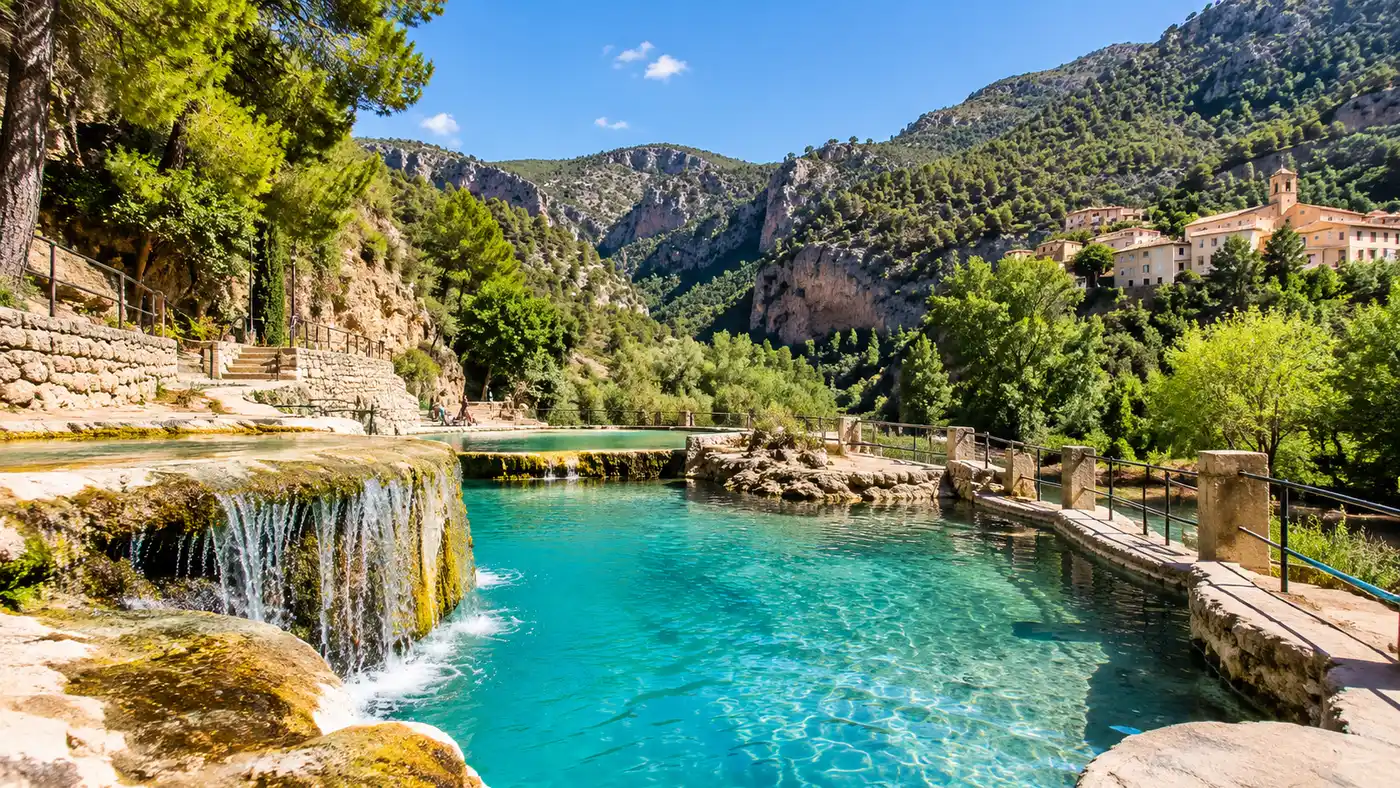
Most people assume inland Valencia stays sweltering all year, but the reality up in the Alto Mijares gorge caught me completely off guard on my first trip. Checking the montanejos weather before leaving the coast is the smartest move you can make. The village sits tucked away between rugged limestone cliffs at around 418 meters above sea level, meaning the conditions here rarely mirror the balmy beach reports from Valencia city or Castellón.
The famous thermal springs pump out clean water at an unyielding 25°C every single day of the year, yet the air around that water changes violently across the seasons. A sunny afternoon in June feels worlds apart from a crisp morning in November. Whether you plan to lounge along the riverbank, scale the crags, or trek through the pine forests, knowing what the sky will do determines how much you will actually enjoy your visit.
Book your hot springs of montanejos experience:
Understanding Montanejos Weather and the Gorge Microclimate
The local topography creates strange little weather pockets. Montanejos rests in a deep river valley carved by the Mijares River, surrounded by the steep peaks of the Sierra de Espadán and the Sierra de Javalambre. Cold air drains into the canyon basin at night, while towering rock faces soak up midday heat and radiate warmth long after sunset. If you stand directly inside the chasm at Fuente de los Baños at noon, you might bake under intense sun, but walk 20 meters into the shadow of the cliff and the ambient temperature drops five degrees instantly.
Coastal storms blowing off the Mediterranean Sea often lose their moisture before reaching this far inland. The village averages roughly 310 sunny or partly clear days annually. When rain does settle in, usually around late October or April, downpours can be fierce and sudden. Those checking el tiempo montanejos during shoulder seasons will notice that mountain fronts sweep through quickly. Clouds bank up against the peaks, dump rain for two hours, and vanish to leave brilliant blue skies behind.
Wind is another factor people forget to account for. Air currents funnel through the narrow gorge like a chimney. Even in the dead of summer, an afternoon breeze often kicks up along the riverbed. In December or January, that exact same breeze cuts right through wool layers, making a 12°C afternoon feel closer to freezing if you linger in wet clothing.
Note: Summer storms in the mountains upstream can cause river levels to surge unexpectedly. Keep an eye on local alerts if dark clouds gather over Teruel, even if your sky in the village is clear.
Month-by-Month Montanejos Weather and River Conditions
Temperatures swing dramatically between the winter frost and the fiery summer peaks. Planning around these numbers makes the difference between an idyllic mountain escape and shivering in your towel by the river.
| Month | Avg High (°C) | Avg Low (°C) | Rainy Days | Swimming Comfort |
|---|---|---|---|---|
| January | 11°C | 1°C | 4 | Bracing (warm river, freezing air) |
| February | 13°C | 2°C | 4 | Chilly outside the water |
| March | 16°C | 4°C | 5 | Refreshing on sunny afternoons |
| April | 19°C | 7°C | 7 | Pleasant for brave swimmers |
| May | 24°C | 11°C | 6 | Ideal balance of sun and mild air |
| June | 29°C | 16°C | 4 | Perfect swimming conditions |
| July | 33°C | 19°C | 2 | Very hot air, crisp river relief |
| August | 33°C | 19°C | 3 | Hot, crowded, water feels great |
| September | 27°C | 15°C | 5 | Magnificent, warm and quiet |
| October | 21°C | 10°C | 7 | Crisp air, empty riverbanks |
| November | 15°C | 5°C | 5 | Steamy water, cold breeze |
| December | 12°C | 2°C | 4 | Thermal steam rising, winter vibe |
Winter mornings often bring frost to the car windshields in town. By midday in January, the sun warms the limestone walls up to roughly 12°C, which makes walking comfortable if you wear a decent fleece. The water in the thermal lagoon remains locked at 25°C. Stepping into the warm water while steam rises around the canyon rocks is magical, but getting out onto the cold pebbles requires sheer willpower and a thick bathrobe.
Spring is my personal favorite. By May, daylight stretches out, wildflowers cover the hillsides, and daily highs hover around 24°C. The contrast between warm sunshine and cool mountain air makes outdoor activity effortless. Late spring also brings enough warmth that stepping out of the river does not give you an immediate case of the chills.
July and August can push past 36°C on the hottest afternoons. Because the village sits in a mountain bowl, heat can feel heavy between 2:00 PM and 5:00 PM. Fortunately, the river water feels deliciously cool compared to the blazing sun. When September arrives, the crowds thin out rapidly, yet the daytime air stays around 27°C, making early autumn arguably the prime window of the entire calendar.
Pro tip: Visit in late September on a weekday. The river temperature is still 25°C, the air hovers at 26°C, and you will share the entire gorge with just a handful of locals.
Best Season for Swimming in Fuente de los Baños
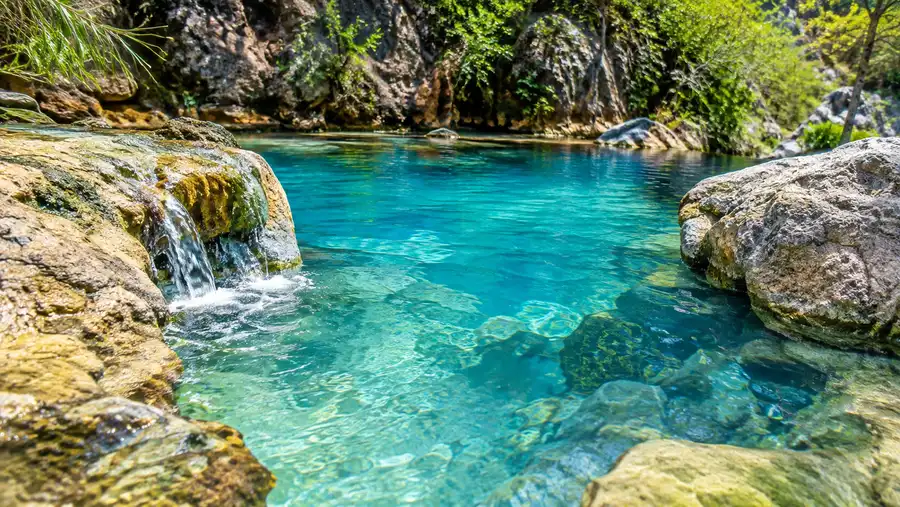
The eternal 25°C water temperature confuses a lot of first-time visitors. People hear that number and imagine bathwater. In reality, 25°C is refreshingly cool on a hot summer day, and pleasantly mild on a cold afternoon. Your comfort depends entirely on the air temperature outside.
During July and August, jumping into the river provides sheer relief from the baking inland heat. The water cleanses away the summer stickiness, and you dry off within five minutes on the sun-warmed rocks. The downside is obvious: thousands of other travelers have the exact same idea. Capacity limits are enforced at the site during high season, so you must sort your Fuente de los Baños tickets and access rules well before showing up at the turnstiles.
For a quieter dip, consider early June or the middle of September. During these weeks, the midday sun is strong enough to keep you comfortable while dripping wet on the bank, but the sheer chaos of peak holiday season has vanished. You can float down the turquoise channels without bumping elbows with a dozen floaties.
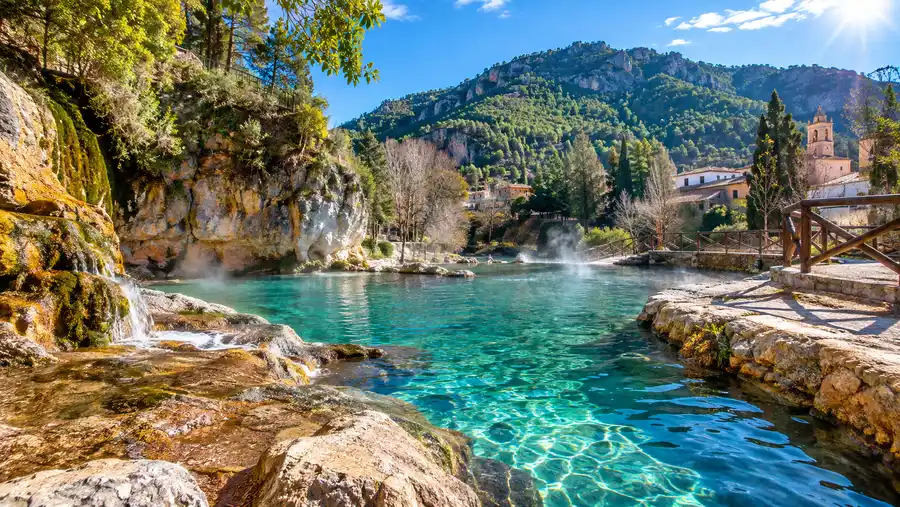
Winter swimming is a niche pursuit, but it has a dedicated following. On crisp December mornings, steam curls off the emerald pools like a sauna. Locals plunge in for 20 minutes, climb out, bundle into thermal parkas, and head straight to a village café for hot chocolate. It wakes you up faster than a double espresso.
Book your hot springs of montanejos experience:
Montanejos Weather for Hiking, Climbing, and Adventure
Water lovers want blazing sun, but hikers and rock climbers pray for completely different conditions. Attempting to scramble up the sun-baked cliffs of the Barranco de la Maimona in mid-August is an exercise in misery. The rock gets hot enough to soften shoe rubber, and the canyon turns into an oven.
For serious trail work or bouldering, October through April is prime time. Cool mountain air keeps your heart rate manageable on steep ascents, and the crisp atmosphere offers ridiculous visibility from high viewpoints like the Morrón de Campos. If you want to dive into hiking the surrounding ravines, schedule your trip for the shoulder seasons when the terrain is dry and temperatures stick between 15°C and 22°C.
- Rock climbing season: November to March offers sticky friction on south-facing crags, while north faces provide shaded relief during May and September.
- Rafting and kayaking: May through August brings reliable dam releases and warm air that makes river splashes welcome rather than punishing.
- Trail running and peak bagging: March to May and October to November provide cool breezes, stable ground, and long daylight hours.
- Canyon exploration: Late spring guarantees flowing water without the freezing runoff temperatures typical of late winter.
When tracking tiempo montanejos for outdoor treks, pay close attention to morning dew and humidity. Shaded canyon trails stay slick until the sun climbs high enough to dry the limestone. Slips on wet river rock are the most common source of sprained ankles around here.
What to Pack Based on the Local Weather
Packing for this region requires some strategy because temperature swings of 18 degrees between dawn and midafternoon are routine. You can freeze at breakfast and sweat through your shirt by lunchtime.
Layering is the golden rule. In spring or autumn, start with a breathable t-shirt, add a light fleece, and carry a windbreaker in your daypack. Once the afternoon sun hits the valley floor, you can shed down to short sleeves. By 7:00 PM, as the sun dips behind the cliffs, you will reach for that fleece again almost immediately.
- Summer gear: broad-brimmed hat, polarized sunglasses for limestone glare, reef-safe sunscreen, neoprene water booties, and a quick-dry towel.
- Shoulder season essentials: zip-off hiking trousers, breathable thermal layers, lightweight wind shell, and sturdy trail shoes with good rubber grip.
- Winter kit: warm beanie, insulated jacket, heavy bathrobe or changing poncho for post-swim drying, and thermal socks for evening walks in the village.
Footwear matters more than people think. The stones surrounding the thermal pools are smooth, polished river pebbles that feel like walking on wet glass. Checking the tiempo en montanejos won't save you if you bring cheap foam flip-flops that slide out from under you on damp slopes.
Frequently Asked Questions about montanejos weather
What is the absolute best month to visit Montanejos?
September is widely considered the sweet spot. The river water stays pleasant, daytime air hovers around 27°C, summer crowds have thinned out, and the autumn rains rarely begin before the final days of October.
Can you swim in the Montanejos hot springs during winter?
Yes, the water remains at 25°C throughout the entire year. The water feels delightfully warm against the cold winter air, though you will want a thick towel or bathrobe waiting within arm's reach the moment you get out.
Does it snow in Montanejos?
Snow is rare in the village center, falling maybe once every three or four years. The higher peaks surrounding the valley, reaching past 1,000 meters, occasionally catch a light dusting between January and February.
Quick Reference
- Water temp: constant 25°C year-round
- Hottest months: July & August (33°C avg high)
- Best swimming: June & September
- Best hiking: October to April
- Rainiest period: October & April
Book your hot springs of montanejos experience:
The Bottom Line
Montanejos is not a one-season wonder. Summer serves up lively river swimming and long days basking on limestone ledges, while autumn and spring unlock world-class hiking through quiet, fragrant pine forests. Even winter has its own quiet magic if you are brave enough to steam in the river while frost blankets the olive groves. Pick the season that matches your rhythm, throw a couple of extra layers into your bag just in case, and go enjoy one of the wildest corners of the Valencian interior.
Read more about hot springs of montanejos.